

Ozonated oils are widely explored in natural skincare, dermatology research, and antimicrobial topical formulations.
Most people are familiar with ozonated olive oil, but coconut oil can also be ozonated — although the chemistry and resulting properties are quite different.
Understanding these differences helps explain why different oils behave differently during ozonation and why certain oils are chosen for specific applications.
Want to understand the detailed chemistry behind ozonated oils?
Our educational article “The Chemistry of Ozonated Olive Oil” explains how ozone reacts with unsaturated fatty acids and how ozonide structures form during ozonation.
👉 Read the full chemistry explanation here:
The Chemistry of Ozonated Olive Oil
The Key Difference: Saturated vs Unsaturated Oils
The most important factor determining how an oil reacts with ozone is its fatty acid structure.
Olive Oil
Olive oil contains a high proportion of monounsaturated fatty acids, particularly oleic acid.
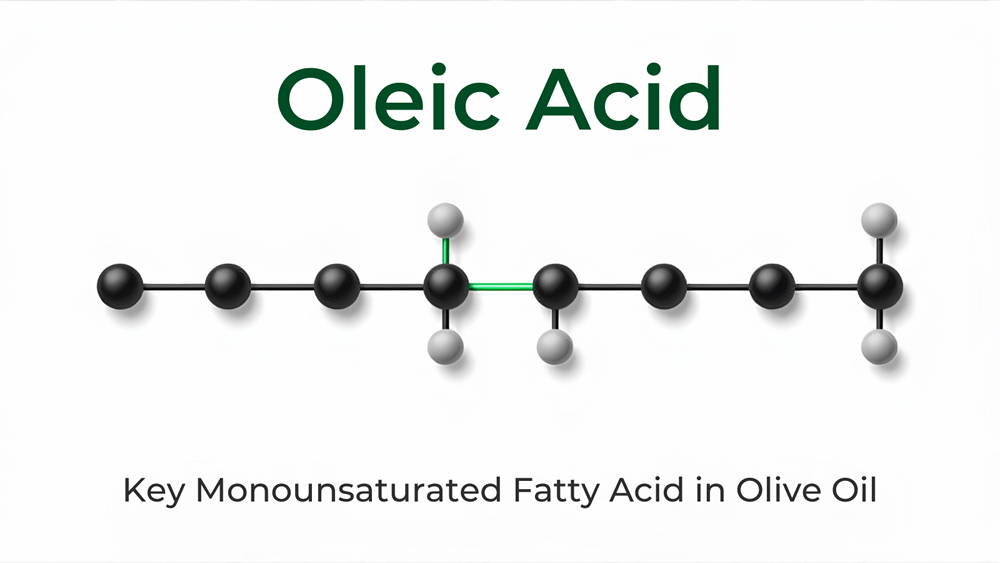
Simplified structure:
CH₃–(CH₂)₇–CH=CH–(CH₂)₇–COOH
The carbon-carbon double bond (C=C) is the site where ozone reacts.
These double bonds allow ozone to perform a reaction known as ozonolysis, forming ozonides and peroxide structures that store reactive oxygen chemistry within the oil.
Coconut Oil
Coconut oil has a very different composition.
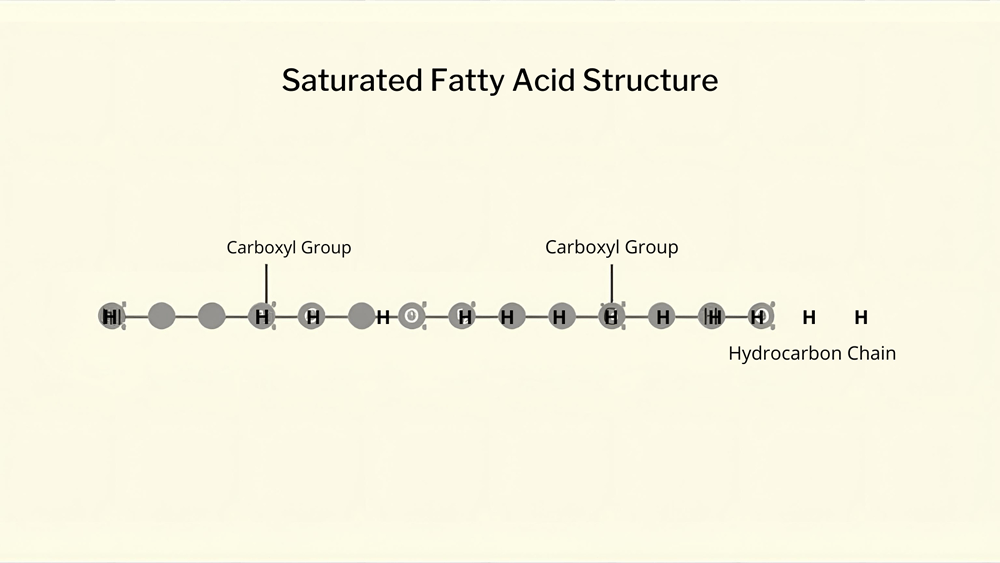
It is composed primarily of saturated fatty acids, including:
- lauric acid
- myristic acid
- palmitic acid
Example simplified structure:
CH₃–CH₂–CH₂–CH₂–CH₂–COOH
These molecules contain no carbon-carbon double bonds.
Because ozone reacts primarily with double bonds, coconut oil provides far fewer reactive sites. This means the ozonation process proceeds very differently.
What Happens When Coconut Oil Is Ozonated
When ozone is bubbled through coconut oil, several reactions occur.
Because the oil lacks double bonds, ozone cannot form large numbers of classic ozonide structures as it does in olive oil.
Instead, ozone reacts more slowly through oxidation reactions involving:
- alcohol groups
- ester bonds
- minor unsaturated components present in the oil
These reactions generate smaller amounts of oxygen-containing molecules such as:
- peroxides
- hydroperoxides
- oxidized lipid compounds
However, the total concentration of these compounds is generally lower than what forms in highly unsaturated oils.
Why Coconut Oil Behaves Differently During Ozonation
Coconut oil also has a unique physical structure.
At room temperature it is semi-solid, which slows the movement of ozone bubbles through the oil.
This changes the ozonation process in several ways:
- ozone diffusion occurs more slowly
- fewer reactive sites are available
- the oil thickens less dramatically than olive oil
Because of this, coconut oil usually requires longer ozonation times.
Typical Ozonation Process for Coconut Oil
The basic process is similar to olive oil ozonation.
Step 1 — Ozone generation
Ozone is produced from oxygen using an electrical discharge.
3 O₂ → 2 O₃
Step 2 — Bubbling ozone through oil
Ozone gas is bubbled through the coconut oil using a diffuser stone.
Because coconut oil is semi-solid at room temperature, gentle warming is often used to keep it liquid so ozone bubbles can pass through the oil.
Step 3 — Extended ozonation
Coconut oil typically requires longer ozonation times than olive oil.
Many producers ozonate coconut oil for:
- 24 hours
- 48 hours
- sometimes longer
Ozone concentrations used in these processes may range roughly between 20–60 µg/ml, depending on the intended formulation.
Why Some Producers Still Ozonate Coconut Oil
Even though coconut oil reacts more slowly with ozone, it has several interesting properties.
Natural Antimicrobial Lipids
Coconut oil contains lauric acid, which can convert into monolaurin, a compound studied for antimicrobial properties.
When combined with oxidized oxygen compounds produced during ozonation, this may create a useful topical formulation.
Skin Compatibility
Coconut oil is widely used in cosmetics because it:
- spreads easily on skin
- is highly moisturizing
- absorbs well into the outer skin layers
This makes ozonated coconut oil attractive for:
- skincare products
- cosmetic formulations
- moisturizing balms
Thickness and Texture Differences
One of the most visible differences between ozonated oils is texture.
Ozonated olive oil often becomes:
- thick
- cloudy
- gel-like
Ozonated coconut oil tends to remain:
- softer
- cream-like
- easier to spread
This makes coconut oil useful for cosmetic creams and topical preparations.
Shelf Life and Stability
Both ozonated olive oil and ozonated coconut oil can remain chemically active for extended periods when stored properly.
Stability depends on:
- temperature
- light exposure
- air exposure
Proper storage conditions include:
- dark glass containers
- cool temperatures
- minimal light exposure
Because olive oil forms more ozonide structures, it often stores higher concentrations of oxygen-rich compounds than coconut oil.
Ozonated Oils and Ozone Gas (Vapour)Delivery
In some ozone applications, ozone gas is first passed through olive oil before being delivered in very low concentrations into the respiratory tract.
During this process, part of the ozone reacts with the olive oil, while another portion continues through the system. Olive oil is used because its unsaturated fatty acids readily react with ozone, allowing ozone reaction products such as ozonides to form within the oil.
As ozonation continues, the oil becomes increasingly saturated with these compounds. In the early phase, the oil may still function within a vapour delivery method. Once it becomes heavily ozonated, however, it is no longer appropriate for inhalation-style use and should instead be considered a potent ozonated olive oil for other applications.
Why Olive Oil Remains the Most Common Ozonated Oil
Because olive oil contains abundant double bonds, it forms:
- large numbers of ozonide molecules
- peroxide structures
- oxygen-rich lipid compounds
This makes it particularly effective for storing reactive oxygen chemistry.
For this reason olive oil remains the most widely used oil in ozonation research and topical ozone preparations.
Final Perspective
Both olive oil and coconut oil can be ozonated, but they behave very differently because of their molecular structure.
Olive oil reacts readily with ozone due to its unsaturated fatty acids, forming stable ozonide compounds that store reactive oxygen chemistry.
Coconut oil reacts more slowly and produces a milder oxidized oil, which can make it useful in cosmetic or moisturizing formulations.
Understanding these differences helps explain why different oils are chosen for different ozone-related preparations.

Recover U Technologies and Services Inc.
Maya Fabiszak, Director, Certified Oxidative Therapies Specialist, Certified Nutritionist & Environmental Lifestyle Counselor, phone 647.909.7419
Ewa Pringle, Cofounder, phone 289.217.5552
Websites:
Recover U Technologies and Services Inc.
Swiss Bionic Solutions