(+289) 217-5552 or (+647) 909-7419 info@resonateintowellness.com
Why Coconut Oil Reacts Differently from Olive Oil During Ozonation

Why Coconut Oil Reacts Differently from Olive Oil During Ozonation

Ozonated oils are widely explored in natural skincare, dermatology research, and antimicrobial topical formulations.

Most people are familiar with ozonated olive oil, but coconut oil can also be ozonated — although the chemistry and resulting properties are quite different.

Understanding these differences helps explain why different oils behave differently during ozonation and why certain oils are chosen for specific applications.

Want to understand the detailed chemistry behind ozonated oils?

Our educational article “The Chemistry of Ozonated Olive Oil” explains how ozone reacts with unsaturated fatty acids and how ozonide structures form during ozonation.

👉 Read the full chemistry explanation here:
The Chemistry of Ozonated Olive Oil


The Key Difference: Saturated vs Unsaturated Oils

The most important factor determining how an oil reacts with ozone is its fatty acid structure.

Olive Oil

Olive oil contains a high proportion of monounsaturated fatty acids, particularly oleic acid.
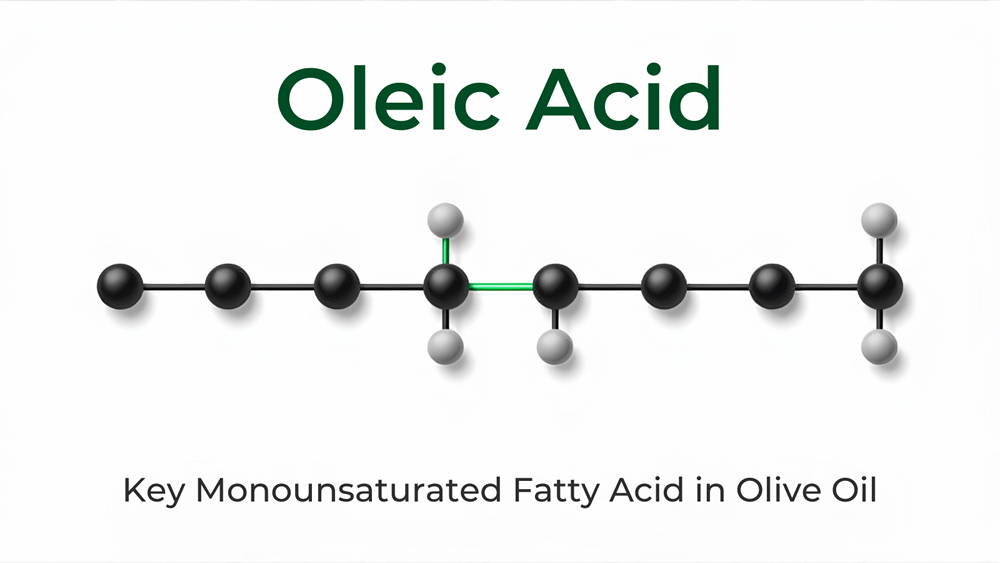
Oleic Acid Structure

Simplified structure:

CH₃–(CH₂)₇–CH=CH–(CH₂)₇–COOH

The carbon-carbon double bond (C=C) is the site where ozone reacts.

These double bonds allow ozone to perform a reaction known as ozonolysis, forming ozonides and peroxide structures that store reactive oxygen chemistry within the oil.


Coconut Oil

Coconut oil has a very different composition.
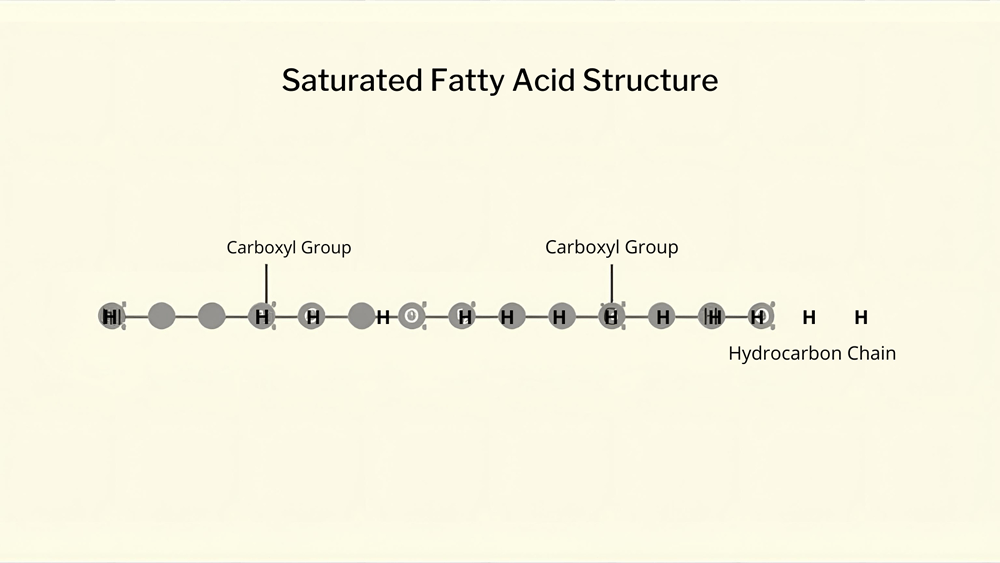
Coconut Oil, saturated fatty acid structure

It is composed primarily of saturated fatty acids, including:

  • lauric acid
  • myristic acid
  • palmitic acid

Example simplified structure:

CH₃–CH₂–CH₂–CH₂–CH₂–COOH

These molecules contain no carbon-carbon double bonds.

Because ozone reacts primarily with double bonds, coconut oil provides far fewer reactive sites. This means the ozonation process proceeds very differently.


What Happens When Coconut Oil Is Ozonated

When ozone is bubbled through coconut oil, several reactions occur.

Because the oil lacks double bonds, ozone cannot form large numbers of classic ozonide structures as it does in olive oil.

Instead, ozone reacts more slowly through oxidation reactions involving:

  • alcohol groups
  • ester bonds
  • minor unsaturated components present in the oil

These reactions generate smaller amounts of oxygen-containing molecules such as:

  • peroxides
  • hydroperoxides
  • oxidized lipid compounds

However, the total concentration of these compounds is generally lower than what forms in highly unsaturated oils.


Why Coconut Oil Behaves Differently During Ozonation

Coconut oil also has a unique physical structure.

At room temperature it is semi-solid, which slows the movement of ozone bubbles through the oil.

This changes the ozonation process in several ways:

  • ozone diffusion occurs more slowly
  • fewer reactive sites are available
  • the oil thickens less dramatically than olive oil

Because of this, coconut oil usually requires longer ozonation times.


Typical Ozonation Process for Coconut Oil

The basic process is similar to olive oil ozonation.
Step 1 — Ozone generation

Ozone is produced from oxygen using an electrical discharge.

3 O₂ → 2 O₃
Step 2 — Bubbling ozone through oil

Ozone gas is bubbled through the coconut oil using a diffuser stone.

Because coconut oil is semi-solid at room temperature, gentle warming is often used to keep it liquid so ozone bubbles can pass through the oil.
Step 3 — Extended ozonation

Coconut oil typically requires longer ozonation times than olive oil.

Many producers ozonate coconut oil for:

  • 24 hours
  • 48 hours
  • sometimes longer

Ozone concentrations used in these processes may range roughly between 20–60 µg/ml, depending on the intended formulation.


Why Some Producers Still Ozonate Coconut Oil

Even though coconut oil reacts more slowly with ozone, it has several interesting properties.

Natural Antimicrobial Lipids

Coconut oil contains lauric acid, which can convert into monolaurin, a compound studied for antimicrobial properties.

When combined with oxidized oxygen compounds produced during ozonation, this may create a useful topical formulation.


Skin Compatibility

Coconut oil is widely used in cosmetics because it:

  • spreads easily on skin
  • is highly moisturizing
  • absorbs well into the outer skin layers

This makes ozonated coconut oil attractive for:

  • skincare products
  • cosmetic formulations
  • moisturizing balms

Thickness and Texture Differences

One of the most visible differences between ozonated oils is texture.

Ozonated olive oil often becomes:

  • thick
  • cloudy
  • gel-like

Ozonated coconut oil tends to remain:

  • softer
  • cream-like
  • easier to spread

This makes coconut oil useful for cosmetic creams and topical preparations.


Shelf Life and Stability

Both ozonated olive oil and ozonated coconut oil can remain chemically active for extended periods when stored properly.

Stability depends on:

  • temperature
  • light exposure
  • air exposure

Proper storage conditions include:

  • dark glass containers
  • cool temperatures
  • minimal light exposure

Because olive oil forms more ozonide structures, it often stores higher concentrations of oxygen-rich compounds than coconut oil.

Ozonated Oils and Ozone Gas (Vapour)Delivery

In some ozone applications, ozone gas is first passed through olive oil before being delivered in very low concentrations into the respiratory tract.

During this process, part of the ozone reacts with the olive oil, while another portion continues through the system. Olive oil is used because its unsaturated fatty acids readily react with ozone, allowing ozone reaction products such as ozonides to form within the oil.

As ozonation continues, the oil becomes increasingly saturated with these compounds. In the early phase, the oil may still function within a vapour delivery method. Once it becomes heavily ozonated, however, it is no longer appropriate for inhalation-style use and should instead be considered a potent ozonated olive oil for other applications.


Why Olive Oil Remains the Most Common Ozonated Oil

Because olive oil contains abundant double bonds, it forms:

  • large numbers of ozonide molecules
  • peroxide structures
  • oxygen-rich lipid compounds

This makes it particularly effective for storing reactive oxygen chemistry.

For this reason olive oil remains the most widely used oil in ozonation research and topical ozone preparations.


Final Perspective

Both olive oil and coconut oil can be ozonated, but they behave very differently because of their molecular structure.

Olive oil reacts readily with ozone due to its unsaturated fatty acids, forming stable ozonide compounds that store reactive oxygen chemistry.

Coconut oil reacts more slowly and produces a milder oxidized oil, which can make it useful in cosmetic or moisturizing formulations.

Understanding these differences helps explain why different oils are chosen for different ozone-related preparations.

Recover U Technologies and Services Inc.

Maya Fabiszak, Director, Certified Oxidative Therapies Specialist, Certified Nutritionist & Environmental Lifestyle Counselor, phone 647.909.7419
Ewa Pringle, Cofounder, phone 289.217.5552

Websites:
Recover U Technologies and Services Inc.
Swiss Bionic Solutions

Why Ozonated Olive Oil Becomes Thick

The Chemistry Behind a Very Unusual Oil

People who first experiment with ozonated olive oil often notice something surprising.

The oil begins looking like normal olive oil — clear, smooth, and fluid.

But after prolonged exposure to ozone, the oil can change dramatically. Instead of flowing freely, it may become thicker, sometimes even forming a soft gel.

At first glance this might look like the oil has spoiled or degraded. In reality, something more interesting has occurred.

The oil has undergone a chemical transformation.


Ozone Does Not Simply “Mix” With Oil

When ozone gas is introduced into olive oil, it does not simply dissolve in the liquid.

Instead, it reacts chemically with specific parts of the oil molecules.

Olive oil contains fatty acids, and the most important one for this reaction is oleic acid.

A simplified portion of its structure looks like this:

–CH = CH–

This carbon-carbon double bond is the key reaction site.

Double bonds contain a region of high electron density, which makes them attractive targets for ozone molecules.

When ozone encounters this bond, it reacts through a chemical process called ozonolysis.


What Happens During Ozonolysis

During ozonolysis, ozone reacts with the double bond in the fatty acid and creates new oxygen-containing molecules.

Over time, the oil becomes a mixture of compounds such as:

  • ozonides
  • peroxides
  • hydroperoxides
  • other oxidized lipid molecules

These new molecules contain additional oxygen atoms incorporated into the original fatty acid structure.

Because the molecules have changed, the physical properties of the oil also begin to change.


Why the Oil Starts to Thicken

As ozonation continues, more fatty acid molecules are converted into these oxygen-rich structures.

These modified molecules interact with each other more strongly than the original oil molecules.

Normal oil molecules slide past each other easily, which is why fresh olive oil flows freely.

But oxidized lipid molecules behave differently. Their oxygen-containing groups can interact through weak molecular attractions.

Over time, these interactions create loose molecular networks within the oil.

An easy way to imagine this is to compare:

  • loose threads moving freely
  • threads tied together at multiple points

When enough connections form, the molecules cannot move as freely.

As a result:

  • the oil flows more slowly
  • viscosity increases
  • the liquid may gradually become gel-like

This is why strongly ozonated olive oil sometimes resembles a soft ointment rather than a liquid oil.


Thickening Is a Sign of Chemical Change

he thickening of ozonated oil is not simply cosmetic.

It is a visible sign that chemical reactions have occurred inside the oil.

The original fatty acid molecules have been converted into new oxygen-containing lipid structures.

These structures may include ozonide rings and peroxide bonds, which are characteristic products of ozonolysis.

Because these molecules differ significantly from the original oil, the physical behavior of the liquid changes as well.


Why Olive Oil Works Well for Ozonation

Not all oils react the same way when exposed to ozone.

Olive oil works particularly well because it contains a large proportion of oleic acid, which provides many double bonds that ozone can react with.

Oils with fewer double bonds provide fewer reaction sites, so ozonation proceeds more slowly.

The molecular structure of the oil therefore plays an important role in determining how strongly the oil changes during ozonation.


Why Different Oils Behave Differently

Different oils contain different types of fatty acids.

Some oils contain mostly unsaturated fatty acids with double bonds.

Others contain mostly saturated fatty acids, which lack these reactive sites.

Because ozone reacts primarily with carbon-carbon double bonds, oils with more unsaturated fatty acids generally react more strongly.

This is why different oils produce very different ozonated products.


A Deeper Explanation of the Chemistry

The chemistry behind ozonated oils involves several steps:

  • ozone attacking fatty acid double bonds
  • formation of unstable reaction intermediates
  • rearrangement into ozonide molecules
  • accumulation of oxygen-containing lipid compounds

These reactions gradually transform the molecular structure of the oil.

As more molecules change, the overall properties of the oil change as well.

The increasing viscosity of ozonated olive oil is therefore one of the most visible signs that these reactions have taken place


Want to See the Full Chemistry?.

This article explains only the basic reason why ozonated olive oil thickens.

For readers interested in the full chemistry — including the detailed reaction steps and molecular diagrams — see the main article below.

👉 Read the full explanation:
The Chemistry of Ozonated Oils: Reactions, Biology, and Practical Applications

Recover U Technologies and Services Inc.

Maya Fabiszak, Director, Certified Oxidative Therapies Specialist, Certified Nutritionist & Environmental Lifestyle Counselor, phone 647.909.7419
Ewa Pringle, Cofounder, phone 289.217.5552

Websites:
Recover U Technologies and Services Inc.
Swiss Bionic Solutions

Ozone Therapy Is Used Worldwide — So Why Not in the U.S. and Canada?

Ozone Therapy Is Used Worldwide — So Why Not in the U.S. and Canada?

Ozone therapy is used in hospitals, clinics, and medical practices across Europe, Latin America, Asia, and parts of the Middle East. In many countries, it is regulated, taught, and applied under established medical frameworks.

Yet two countries stand apart: the United States and Canada.

While ozone therapy remains restricted in North America, international clinical use spans decades and includes applications such as autohemotherapy, insufflation, topical care, and dental ozone. Many countries regulate ozone therapy through physician oversight, professional societies, and medical-device standards rather than outright prohibition.

This contrast raises important questions about informed choice, regulatory consistency, and access to global medical knowledge.

To better understand how ozone therapy is practiced worldwide, we’ve compiled a comprehensive country-by-country educational resource outlining regulation, availability, and safety considerations.

👉 Read the full global ozone therapy overview here:
[Ozone Therapy Around the World – Full Article]

(Educational content only. Not medical advice.)


Mud, Paws, Fur & Mystery Smells: Everyday Pet Cleanliness with Ozonated Water

Mud, Paws, Fur & Mystery Smells: Everyday Pet Cleanliness with Ozonated Water

Active pets bring the outdoors home with them. Mud, bacteria, and unknown substances often settle on paws, fur, and bedding.

Why ozonated water is useful for routine cleaning

  • Gentle on skin
  • No lingering residue
  • Breaks down naturally into oxygen
  • Ideal for frequent use

Practical uses

  • Paw rinsing after walks
  • Fur wiping after parks or trails
  • Cleaning bowls, crates, toys, and grooming tools

Always use ozonated water fresh, as its activity decreases over time.

For a complete overview of safe home use, see:
👉 Ozone & Pets: Practical, Responsible Home Uses

Recover U Technologies and Services Inc.

Maya Fabiszak, Director, Certified Oxidative Therapies Specialist, Certified Nutritionist & Environmental Lifestyle Counselor, phone 647.909.7419
Ewa Pringle, Cofounder, phone 289.217.5552

Websites:
Recover U Technologies and Services Inc.
Swiss Bionic Solutions
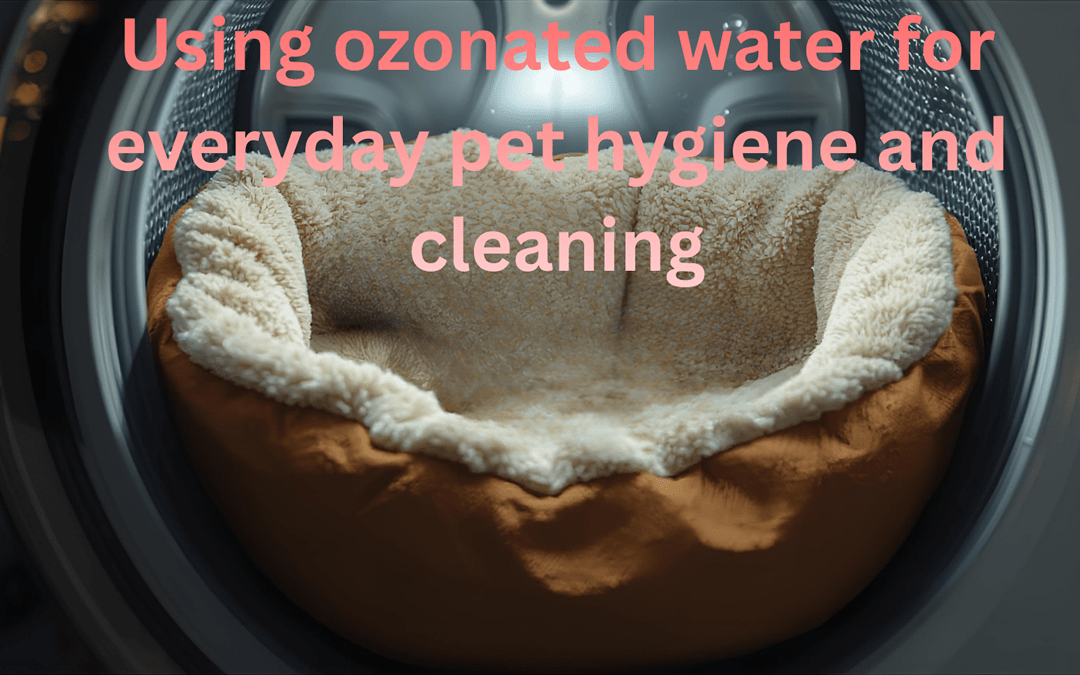
Pet Oral Hygiene: A Simple Way Ozonated Water Can Support Daily Dental Care

Pet Oral Hygiene: A Simple Way Ozonated Water Can Support Daily Dental Care

Bad breath in pets is more than cosmetic — it’s often linked to bacterial buildup along teeth and gums. While professional dental care is essential, daily hygiene plays a key role.

Why ozone fits oral hygiene

Fresh ozonated water:

  • Is temporary and residue-free
  • Supports surface cleanliness
  • Aligns with how ozone is used in human dental hygiene

How pet owners can use it

  • Apply to a soft toothbrush or gauze
  • Gently wipe teeth and gums
  • Focus on consistency, not intensity

This is supportive hygiene, not treatment.

For clear safety boundaries and best practices, read the main resource article here:
👉 Ozone & Pets: Practical, Responsible Home Uses

Recover U Technologies and Services Inc.

Maya Fabiszak, Director, Certified Oxidative Therapies Specialist, Certified Nutritionist & Environmental Lifestyle Counselor, phone 647.909.7419
Ewa Pringle, Cofounder, phone 289.217.5552

Websites:
Recover U Technologies and Services Inc.
Swiss Bionic Solutions

2026! Growing to Meet Demand: Updates on Our Manufacturing, Assembly & Integrated Therapies

2026! Growing to Meet Demand: Updates on Our Manufacturing, Assembly & Integrated Therapies

As interest in advanced home wellness solutions continues to grow, we want to share an important update about how Recover U Technologies & Services Inc. is evolving to meet that demand—while staying true to our core values of quality, safety, and thoughtful design.

A New Manufacturing Partnership Focused on Quality

We are pleased to announce that we are now working with a new, highly efficient manufacturing partner that meets our strict standards for materials, craftsmanship, and consistency. This partnership allows us to scale production responsibly while maintaining the level of quality our clients expect.

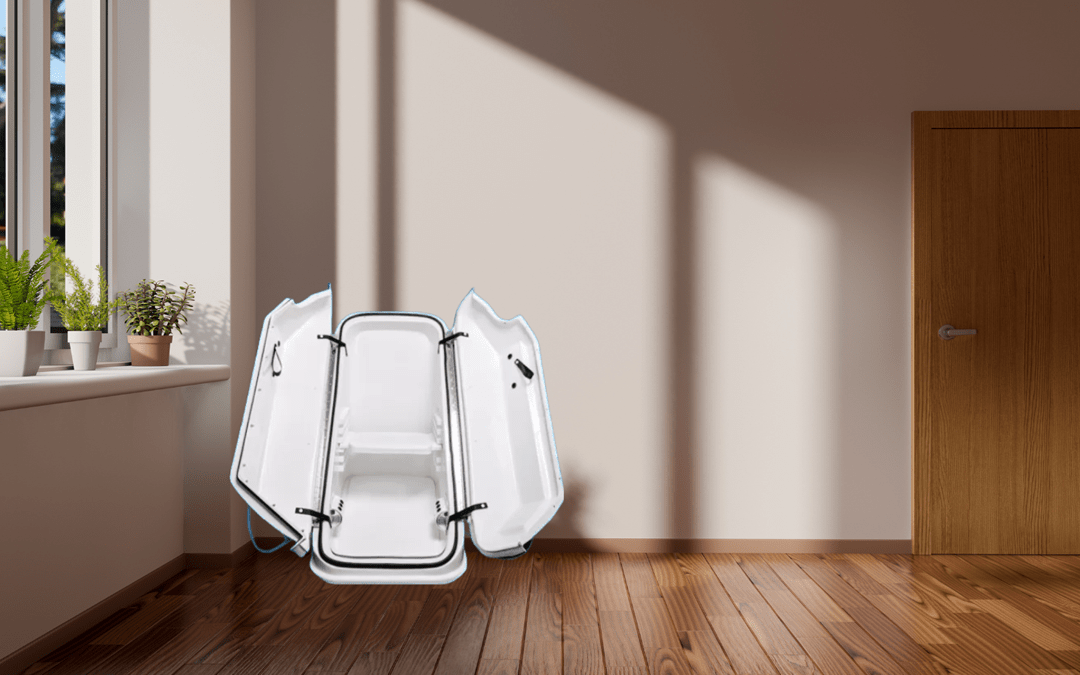
Our steam sauna cabinets are engineered from the ground up to support advanced wellness modalities, including:

  • Ozone therapy
  • CO₂ therapy
  • EWOT (Exercise With Oxygen Therapy)

This compatibility is not an afterthought—it is built directly into the system design to ensure safety, reliability, and long-term performance.

Learn more about who we are and how we work here:
👉 Who We Are
https://resonateintowellness.com/who-we-are/

In-House Assembly: Quality Control Where It Matters Most

To keep pace with increasing demand, we now operate with our own dedicated in-house assembly team. This gives us direct oversight of every system before it reaches a client.

  • Our in-house assembly allows us to:
  • Perform hands-on quality checks
  • Ensure correct integration of therapeutic components
  • Maintain consistency across all units
  • Respond more quickly to customer needs

We believe advanced wellness equipment deserves human oversight, not just automated production—and this step reflects that commitment.

Designed for Advanced Home Sauna Use

Our sauna cabinets are designed for individuals seeking more than a traditional steam experience. They function as a high-quality home sauna platform that can support multiple wellness modalities over time.

You can explore our sauna systems here:
👉 Home Sauna Systems
https://resonateintowellness.com/home-sauna/

Continuing with Swiss Bionic PEMF Technology

We also continue to integrate Swiss Bionic PEMF systems into our wellness offerings.


We chose Swiss Bionic because it aligns with our guiding principles:

Swiss Bionic PEMF system for safe, in-home wellness support

  • Non-invasive and suitable for in-home use
  • Designed for gentle, daily application
  • Built with a strong emphasis on safety standards
  • Backed by long-standing technological development

PEMF (Pulsed Electromagnetic Field) technology is often explored as a way to support the body’s natural bioelectrical environment. In a modern world increasingly saturated with artificial electromagnetic exposure, PEMF is commonly used as part of a broader wellness lifestyle focused on balance and resilience.

We approach PEMF as a supportive wellness technology, not a medical treatment, and prioritize systems with an excellent safety profile.

Looking Ahead

As Recover U continues to grow, our priorities remain clear:

  • Thoughtful manufacturing
  • Direct quality control
  • Responsible integration of wellness technologies
  • Long-term reliability for home use

We are grateful for the trust our clients place in us and look forward to sharing more updates as we continue to expand.

FAQ — Manufacturing, Assembly & Product Quality

Are Recover U sauna systems still manufactured to the same quality standards?

Yes. Our new manufacturing partnership was selected specifically because it meets our strict standards for materials, craftsmanship, and consistency. This change allows us to scale production while maintaining the quality our customers expect.

Why did Recover U add an in-house assembly team?

As demand increased, we chose to bring assembly in-house to maintain direct quality control. This allows us to perform hands-on inspections, ensure proper integration of wellness components, and deliver consistent, reliable systems.

Does in-house assembly affect delivery times?

In-house assembly improves production flow and reliability. While timelines can vary based on demand and customization, this change helps us respond more efficiently and maintain clearer production schedules.

Are the sauna cabinets designed for ozone, CO₂, and EWOT from the start?

Yes. Our sauna cabinets are engineered from the ground up to support ozone therapy, CO₂ therapy, and EWOT. These features are part of the system design—not retrofitted add-ons.

Has anything changed about the sauna performance or materials?

No negative changes. The updates are focused on improving production efficiency and quality oversight while maintaining or improving materials, performance, and system integrity.

Why does Recover U continue to use Swiss Bionic PEMF technology?

We continue to use Swiss Bionic PEMF systems because they align with our values: non-invasive design, suitability for in-home use, strong safety standards, and long-standing development. PEMF is offered as a supportive wellness technology, not a medical treatment.

Does PEMF replace ozone or sauna therapy?

No. PEMF, ozone, and sauna therapies serve different roles. Our systems are designed to allow thoughtful integration of complementary wellness technologies, each used for its own purpose.

How does this update benefit customers directly?

These updates provide customers with:

  • More consistent build quality
  • Better quality control before delivery
  • Systems designed for long-term home use
  • Improved scalability without sacrificing standards

Where can I learn more about Recover U and its approach?

You can learn more about our team, values, and approach here:
👉 https://resonateintowellness.com/who-we-are/