
(+289) 217-5552 or (+647) 909-7419 info@resonateintowellness.com
Why Coconut Oil Reacts Differently from Olive Oil During Ozonation

Why Coconut Oil Reacts Differently from Olive Oil During Ozonation

Ozonated oils are widely explored in natural skincare, dermatology research, and antimicrobial topical formulations.

Most people are familiar with ozonated olive oil, but coconut oil can also be ozonated — although the chemistry and resulting properties are quite different.

Understanding these differences helps explain why different oils behave differently during ozonation and why certain oils are chosen for specific applications.

Want to understand the detailed chemistry behind ozonated oils?

Our educational article “The Chemistry of Ozonated Olive Oil” explains how ozone reacts with unsaturated fatty acids and how ozonide structures form during ozonation.

👉 Read the full chemistry explanation here:
The Chemistry of Ozonated Olive Oil


The Key Difference: Saturated vs Unsaturated Oils

The most important factor determining how an oil reacts with ozone is its fatty acid structure.

Olive Oil

Olive oil contains a high proportion of monounsaturated fatty acids, particularly oleic acid.
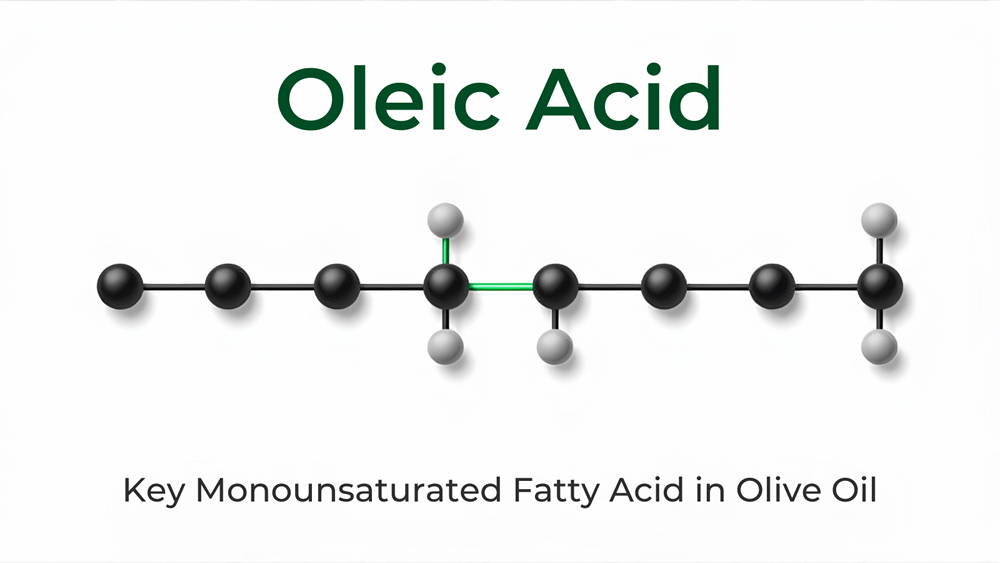
Oleic Acid Structure

Simplified structure:

CH₃–(CH₂)₇–CH=CH–(CH₂)₇–COOH

The carbon-carbon double bond (C=C) is the site where ozone reacts.

These double bonds allow ozone to perform a reaction known as ozonolysis, forming ozonides and peroxide structures that store reactive oxygen chemistry within the oil.


Coconut Oil

Coconut oil has a very different composition.
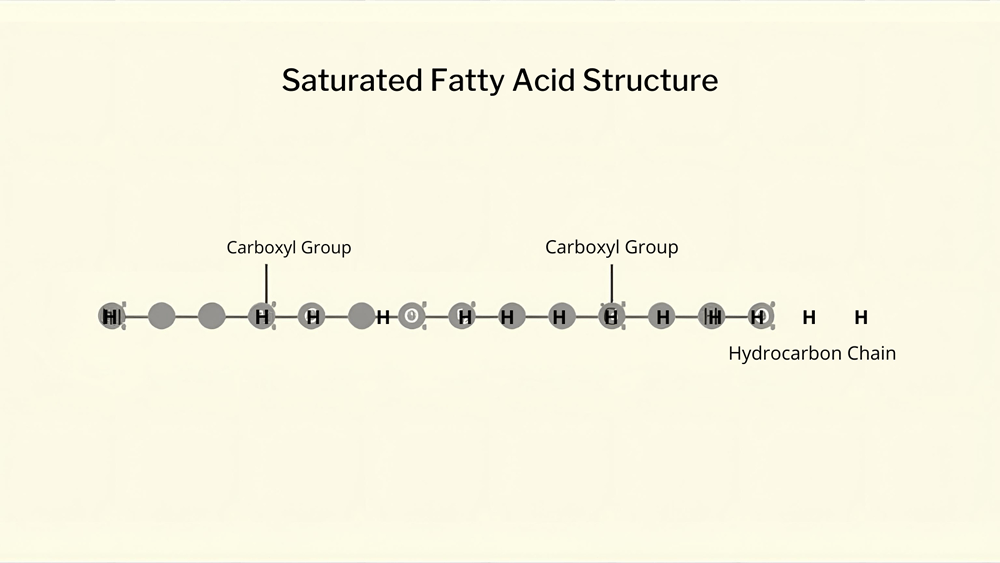
Coconut Oil, saturated fatty acid structure

It is composed primarily of saturated fatty acids, including:

  • lauric acid
  • myristic acid
  • palmitic acid

Example simplified structure:

CH₃–CH₂–CH₂–CH₂–CH₂–COOH

These molecules contain no carbon-carbon double bonds.

Because ozone reacts primarily with double bonds, coconut oil provides far fewer reactive sites. This means the ozonation process proceeds very differently.


What Happens When Coconut Oil Is Ozonated

When ozone is bubbled through coconut oil, several reactions occur.

Because the oil lacks double bonds, ozone cannot form large numbers of classic ozonide structures as it does in olive oil.

Instead, ozone reacts more slowly through oxidation reactions involving:

  • alcohol groups
  • ester bonds
  • minor unsaturated components present in the oil

These reactions generate smaller amounts of oxygen-containing molecules such as:

  • peroxides
  • hydroperoxides
  • oxidized lipid compounds

However, the total concentration of these compounds is generally lower than what forms in highly unsaturated oils.


Why Coconut Oil Behaves Differently During Ozonation

Coconut oil also has a unique physical structure.

At room temperature it is semi-solid, which slows the movement of ozone bubbles through the oil.

This changes the ozonation process in several ways:

  • ozone diffusion occurs more slowly
  • fewer reactive sites are available
  • the oil thickens less dramatically than olive oil

Because of this, coconut oil usually requires longer ozonation times.


Typical Ozonation Process for Coconut Oil

The basic process is similar to olive oil ozonation.
Step 1 — Ozone generation

Ozone is produced from oxygen using an electrical discharge.

3 O₂ → 2 O₃
Step 2 — Bubbling ozone through oil

Ozone gas is bubbled through the coconut oil using a diffuser stone.

Because coconut oil is semi-solid at room temperature, gentle warming is often used to keep it liquid so ozone bubbles can pass through the oil.
Step 3 — Extended ozonation

Coconut oil typically requires longer ozonation times than olive oil.

Many producers ozonate coconut oil for:

  • 24 hours
  • 48 hours
  • sometimes longer

Ozone concentrations used in these processes may range roughly between 20–60 µg/ml, depending on the intended formulation.


Why Some Producers Still Ozonate Coconut Oil

Even though coconut oil reacts more slowly with ozone, it has several interesting properties.

Natural Antimicrobial Lipids

Coconut oil contains lauric acid, which can convert into monolaurin, a compound studied for antimicrobial properties.

When combined with oxidized oxygen compounds produced during ozonation, this may create a useful topical formulation.


Skin Compatibility

Coconut oil is widely used in cosmetics because it:

  • spreads easily on skin
  • is highly moisturizing
  • absorbs well into the outer skin layers

This makes ozonated coconut oil attractive for:

  • skincare products
  • cosmetic formulations
  • moisturizing balms

Thickness and Texture Differences

One of the most visible differences between ozonated oils is texture.

Ozonated olive oil often becomes:

  • thick
  • cloudy
  • gel-like

Ozonated coconut oil tends to remain:

  • softer
  • cream-like
  • easier to spread

This makes coconut oil useful for cosmetic creams and topical preparations.


Shelf Life and Stability

Both ozonated olive oil and ozonated coconut oil can remain chemically active for extended periods when stored properly.

Stability depends on:

  • temperature
  • light exposure
  • air exposure

Proper storage conditions include:

  • dark glass containers
  • cool temperatures
  • minimal light exposure

Because olive oil forms more ozonide structures, it often stores higher concentrations of oxygen-rich compounds than coconut oil.

Ozonated Oils and Ozone Gas (Vapour)Delivery

In some ozone applications, ozone gas is first passed through olive oil before being delivered in very low concentrations into the respiratory tract.

During this process, part of the ozone reacts with the olive oil, while another portion continues through the system. Olive oil is used because its unsaturated fatty acids readily react with ozone, allowing ozone reaction products such as ozonides to form within the oil.

As ozonation continues, the oil becomes increasingly saturated with these compounds. In the early phase, the oil may still function within a vapour delivery method. Once it becomes heavily ozonated, however, it is no longer appropriate for inhalation-style use and should instead be considered a potent ozonated olive oil for other applications.


Why Olive Oil Remains the Most Common Ozonated Oil

Because olive oil contains abundant double bonds, it forms:

  • large numbers of ozonide molecules
  • peroxide structures
  • oxygen-rich lipid compounds

This makes it particularly effective for storing reactive oxygen chemistry.

For this reason olive oil remains the most widely used oil in ozonation research and topical ozone preparations.


Final Perspective

Both olive oil and coconut oil can be ozonated, but they behave very differently because of their molecular structure.

Olive oil reacts readily with ozone due to its unsaturated fatty acids, forming stable ozonide compounds that store reactive oxygen chemistry.

Coconut oil reacts more slowly and produces a milder oxidized oil, which can make it useful in cosmetic or moisturizing formulations.

Understanding these differences helps explain why different oils are chosen for different ozone-related preparations.

Recover U Technologies and Services Inc.

Maya Fabiszak, Director, Certified Oxidative Therapies Specialist, Certified Nutritionist & Environmental Lifestyle Counselor, phone 647.909.7419
Ewa Pringle, Cofounder, phone 289.217.5552

Websites:
Recover U Technologies and Services Inc.
Swiss Bionic Solutions

Why Ozonated Olive Oil Becomes Thick

The Chemistry Behind a Very Unusual Oil

People who first experiment with ozonated olive oil often notice something surprising.

The oil begins looking like normal olive oil — clear, smooth, and fluid.

But after prolonged exposure to ozone, the oil can change dramatically. Instead of flowing freely, it may become thicker, sometimes even forming a soft gel.

At first glance this might look like the oil has spoiled or degraded. In reality, something more interesting has occurred.

The oil has undergone a chemical transformation.


Ozone Does Not Simply "Mix" With Oil

When ozone gas is introduced into olive oil, it does not simply dissolve in the liquid.

Instead, it reacts chemically with specific parts of the oil molecules.

Olive oil contains fatty acids, and the most important one for this reaction is oleic acid.

A simplified portion of its structure looks like this:

–CH = CH–

This carbon-carbon double bond is the key reaction site.

Double bonds contain a region of high electron density, which makes them attractive targets for ozone molecules.

When ozone encounters this bond, it reacts through a chemical process called ozonolysis.


What Happens During Ozonolysis

During ozonolysis, ozone reacts with the double bond in the fatty acid and creates new oxygen-containing molecules.

Over time, the oil becomes a mixture of compounds such as:

  • ozonides
  • peroxides
  • hydroperoxides
  • other oxidized lipid molecules

These new molecules contain additional oxygen atoms incorporated into the original fatty acid structure.

Because the molecules have changed, the physical properties of the oil also begin to change.


Why the Oil Starts to Thicken

As ozonation continues, more fatty acid molecules are converted into these oxygen-rich structures.

These modified molecules interact with each other more strongly than the original oil molecules.

Normal oil molecules slide past each other easily, which is why fresh olive oil flows freely.

But oxidized lipid molecules behave differently. Their oxygen-containing groups can interact through weak molecular attractions.

Over time, these interactions create loose molecular networks within the oil.

An easy way to imagine this is to compare:

  • loose threads moving freely
  • threads tied together at multiple points

When enough connections form, the molecules cannot move as freely.

As a result:

  • the oil flows more slowly
  • viscosity increases
  • the liquid may gradually become gel-like

This is why strongly ozonated olive oil sometimes resembles a soft ointment rather than a liquid oil.


Thickening Is a Sign of Chemical Change

he thickening of ozonated oil is not simply cosmetic.

It is a visible sign that chemical reactions have occurred inside the oil.

The original fatty acid molecules have been converted into new oxygen-containing lipid structures.

These structures may include ozonide rings and peroxide bonds, which are characteristic products of ozonolysis.

Because these molecules differ significantly from the original oil, the physical behavior of the liquid changes as well.


Why Olive Oil Works Well for Ozonation

Not all oils react the same way when exposed to ozone.

Olive oil works particularly well because it contains a large proportion of oleic acid, which provides many double bonds that ozone can react with.

Oils with fewer double bonds provide fewer reaction sites, so ozonation proceeds more slowly.

The molecular structure of the oil therefore plays an important role in determining how strongly the oil changes during ozonation.


Why Different Oils Behave Differently

Different oils contain different types of fatty acids.

Some oils contain mostly unsaturated fatty acids with double bonds.

Others contain mostly saturated fatty acids, which lack these reactive sites.

Because ozone reacts primarily with carbon-carbon double bonds, oils with more unsaturated fatty acids generally react more strongly.

This is why different oils produce very different ozonated products.


A Deeper Explanation of the Chemistry

The chemistry behind ozonated oils involves several steps:

  • ozone attacking fatty acid double bonds
  • formation of unstable reaction intermediates
  • rearrangement into ozonide molecules
  • accumulation of oxygen-containing lipid compounds

These reactions gradually transform the molecular structure of the oil.

As more molecules change, the overall properties of the oil change as well.

The increasing viscosity of ozonated olive oil is therefore one of the most visible signs that these reactions have taken place


Want to See the Full Chemistry?.

This article explains only the basic reason why ozonated olive oil thickens.

For readers interested in the full chemistry — including the detailed reaction steps and molecular diagrams — see the main article below.

👉 Read the full explanation:
The Chemistry of Ozonated Oils: Reactions, Biology, and Practical Applications

Recover U Technologies and Services Inc.

Maya Fabiszak, Director, Certified Oxidative Therapies Specialist, Certified Nutritionist & Environmental Lifestyle Counselor, phone 647.909.7419
Ewa Pringle, Cofounder, phone 289.217.5552

Websites:
Recover U Technologies and Services Inc.
Swiss Bionic Solutions

How Ozone Actually Works — A Simple Explanation Anyone Can Understand

How Ozone Actually Works — A Simple Explanation Anyone Can Understand

Introduction

Ozone is a natural molecule with powerful cleansing and detoxifying abilities.
But most explanations of ozone are overly scientific. Let’s break it down in a simple way so you can understand why ozone steam therapy is becoming more popular in wellness and detox.


What is Ozone?

Ozone is oxygen with a twist.

  • Oxygen = O₂
  • Ozone = O₃

That extra oxygen atom makes ozone “energetic”—meaning it wants to react with things.

This is the reason ozone is used in:

  • drinking water treatment
  • removing chemicals from water
  • sterilizing equipment
  • fish farming
  • cleaning the air
  • and now… supporting the body gently through steam therapy

Why Is Ozone So Powerful?

Because it is a high-energy form of oxygen.

It naturally wants to break down pollutants, chemicals, bacteria, viruses, mold, and anything harmful.

When ozone reacts with something, it neutralizes it and turns back into clean oxygen.

No residue.
No chemicals.
No toxins.


Is Ozone Safe?

Yes — when used correctly.

People should never breathe ozone directly.
But on the skin, it is extremely safe and effective.

In a steam sauna, your head is outside the unit.
You breathe normal air while your body absorbs activated oxygen through the skin.
This method has been used for over 60 years in Europe and is one of the safest ways to introduce ozone to the body without injections or inhalation.


Why the Sauna Makes Ozone Even Better

Heat opens the pores →
steam moves the lymph →
ozone works on the skin →
oxygen levels rise →
the body offloads toxins more efficiently.

Your skin is your largest detox organ.
When ozone meets impurities on or under the skin, it reacts and breaks them down.


What Happens Inside the Sauna?

inside your body:

  • circulation increases
  • oxygen delivery improves
  • the lymph system moves
  • sweating removes toxins
  • ozone breaks down microbial contaminants
  • cells receive more oxygen
  • inflammation is reduced

Why Ozone Has Been Trusted for Over 100 Years

Ozone is used worldwide for:

  • drinking water purification
  • medical sterilization
  • eliminating viruses and bacteria
  • cleaning food surfaces
  • removing pharmaceutical residues
  • treating wastewater
  • aquaculture
  • textile bleaching
  • food preservation

This gives ozone one of the strongest safety profiles of any disinfectant or oxidizer used today.


Why It Matters for Your Health

Your body deals every day with:

  • heavy metals
  • molds
  • chemicals
  • pollution
  • parasites
  • chronic stress
  • low oxygen levels

Recover U Technologies and Services Inc.

Maya Fabiszak, Director, Certified Oxidative Therapies Specialist, Certified Nutritionist & Environmental Lifestyle Counselor, phone 647.909.7419
Ewa Pringle, Cofounder, phone 289.217.5552

Websites:
Recover U Technologies and Services Inc.
Swiss Bionic Solutions

Oxygenated water compared to Ozone Steam + CO2 + EWOT

Oxygenated water compared to Ozone Steam + CO2 + EWOT
Level System Core Elements Type of Oxygen How it Works Main Benefits Power Level
1️⃣ Basic Oxygen Bath Stabilized oxygenated water Passive O₂ Oxygen diffuses through skin → mild tissue oxygenation Relaxation, hydration, light rejuvenation 🟢 Gentle
2️⃣ Intermediate Ozone Steam Sauna Steam + O₃ Active O₃ Ozone meets moist skin → forms ozonides → triggers detox + immune activation Detoxification, improved oxygen use, immune support 🟡 Strong
3️⃣ Advanced Ozone Sauna + EWOT Steam + O₃ + inhaled O₂ Active O₃ + Pure O₂ Ozone activates metabolism + EWOT floods blood with oxygen Energy, circulation, recovery, cellular regeneration 🟠 Very strong
4️⃣ Ultimate (Oxygen Multistep) CO₂ + Ozone Sauna + EWOT CO₂ + O₃ + O₂ Vasodilator CO₂ + Active O₃ + Pure O₂ CO₂ opens capillaries → ozone signals detox → EWOT saturates tissues with oxygen Deep detox, microcirculation repair, mitochondrial activation, anti-aging 🔴 Maximum


Steam Ozone Sauna compared to Infrared Ozone Sauna (with ozone add-on)

Steam Ozone Sauna compared to Infrared Ozone Sauna
Item Steam Ozone Sauna Infrared Ozone Sauna
Electrical Sauna cabinet uses no power. Steamer requires 120V/15A (some models 240V). Ozone generator needs a separate 120V outlet. IR cabins require power: usually 120V/15A, larger units 240V. Ozone generator uses a separate 120V outlet.
Water connection No plumbing required. Steamer is filled manually using the built-in water reservoir. No water connection.
Drain No drain needed. Small moisture can be wiped with a towel. No drain needed.
Install time (2 people) 1–2 hours: place cabinet → connect steamer → leak test → connect ozone → test run → safety signs 2–4 hours: assemble cabin panels → wire heaters → place bench → connect ozone feed & off-gas line → test run
Ozone Use Safe. The head stays outside, and a steam skirt or large towel blocks escape. Not safe. Head is inside. Ozone cannot be used because ozone must never be inhaled.
EWOT (Oxygen mask use) Simple: patient wears O₂ mask while seated; cabinet keeps ozone away from face Possible but more difficult. Concentrator must still stay outside. Tubing must be carefully placed. Cannot use ozone inside.
CO₂ add-on CO₂ from a cylinder enters through a tube and surrounds the body only. Safe because the head is outside, preventing CO₂ inhalation. Supports transdermal absorption. Technically possible but not recommended. Head is inside → difficult to stop CO₂ from entering the breathing zone. Dry air reduces benefit.
Advanced CO₂ Therapy Applications

Advanced CO₂ Therapy Applications

From European Spa Traditions to Modern Wellness Innovation

Introduction

Across Europe’s medical spas — from the mineral-rich CO₂ springs of Rogaška Slatina to the therapeutic gas baths of Germany and Austria — carbon-dioxide therapy has been trusted for generations to enhance circulation, skin vitality, and vascular health.

Today, Recover U Saunas brings this refined therapy into a modern setting with our fiberglass, head-out steam sauna cabinet.
Its non-metallic, ozone-safe design creates the perfect environment for both dry and steam CO₂ applications, offering all the benefits of traditional European treatments without discomfort or complexity.


Why CO₂ Therapy Works

CO₂ gently diffuses through the skin and interacts with capillaries just below the surface.
This triggers vasodilation, increasing blood flow and oxygen exchange.
Through the Bohr effect, haemoglobin releases oxygen more efficiently, so every cell receives more nourishment even without additional oxygen intake.

The result: improved microcirculation, tissue renewal, and relaxation — all achievable inside the comfortable, head-out Recover U fiberglass sauna.


1. CO₂ for Aesthetic Skin Treatments

When used in steam mode, CO₂ therapy becomes an exceptional skin-support tool.
Warm humidity opens pores while CO₂ enhances oxygen delivery and collagen stimulation.

In our fiberglass sauna:

  • The head-out design keeps breathing natural and comfortable.
  • Steam and CO₂ circulate evenly around the body, allowing full-skin exposure.
  • The insulated fiberglass walls maintain gentle, stable heat — crucial for consistent absorption.

Visible results:

Smoother skin tone and elasticity
Reduced cellulite and puffiness
A brighter, healthier complexion

Many European spas perform CO₂ baths before aesthetic treatments.
With the Recover U system, this same effect is achieved safely at home or in-clinic — and it can be followed seamlessly by an ozone steam sauna for deeper detox and antioxidant activation.


2. CO₂ for Vascular and Circulatory Health

CO₂ therapy is one of the most proven natural methods for supporting vascular tone and microcirculation.
It is widely used in Europe for conditions like:

  • Cold hands and feet
  • Mild hypertension
  • Post-injury or post-stroke recovery
  • Venous congestion and oedema

Inside the Recover U sauna, the body remains warm and relaxed while CO₂ gas envelopes the skin.
This non-pressurized environment allows gradual vasodilation — improving blood flow without strain on the heart.

Benefits include:
Warmer extremities and balanced blood pressure
Less swelling and heaviness in the legs
Better tissue oxygenation and faster recovery
The fiberglass chamber’s smooth interior ensures uniform gas exposure, maximizing results with minimal CO₂ usage.


3. Integrating CO₂ Therapy Into Modern Wellness

CO₂ therapy can stand alone — or become the first step in a multi-phase oxygen program.
In the Recover U system, the same sauna transitions effortlessly to ozone steam therapy after the CO₂ phase.

Why this matters:

  • The CO₂ session opens circulation and primes the skin.
  • Switching to ozone immediately afterward lets oxygen penetrate deeper, supporting detox and cellular repair.
  • The head-out design keeps both therapies safe, comfortable, and easy to combine in one appointment.

This makes the Recover U sauna one of the few systems in the world capable of delivering both CO₂ and ozone steam therapy in one ergonomic unit.


Example Advanced CO₂ Protocols

For Circulation & Vascular Support

  • 8–15 min dry CO₂ bath with no raised temperatures and even fully dressed.
  • 2–3 sessions weekly for 4–6 weeks
  • Optional follow-up: 15 min ozone steam sauna (Precaution: Ozone sauna should be started without CO2 and introduction of CO2 should be started with 2minutes and slowly increased from there)

For Skin & Aesthetic Care

  • 10–15 min CO₂ steam bath before ozone or body wrap treatment (same precaution as above)
  • Enhances collagen response and skin tone

For Relaxation & Stress Reduction

  • 10 min dry CO₂ bath (clothed, no steam) with calm breathing and soft music

Safety and Comfort

The Recover U fiberglass cabinet keeps CO₂ safely contained below the neck — no risk of inhalation, no metal corrosion, and full client comfort.
It is resistant to both moisture and ozone, allowing long-term use for either gas.

Clients sensitive to heat or ozone can still receive all the benefits of CO₂ therapy alone.
For others, alternating CO₂ and ozone sessions offers complete oxygen balance — gentle yet deeply restorative.


In Summary

CO₂ therapy is a cornerstone of European spa medicine, now reimagined through Recover U Saunas’ fiberglass, head-out steam system.
It supports circulation, vascular tone, and skin health naturally — and transitions effortlessly into ozone steam sessions for those seeking full detox and oxygen activation.

With this dual-purpose design, practitioners and home users alike can offer or enjoy authentic CO₂ and ozone therapies in one elegant, modern cabinet.


Coming Next

In our next article, we’ll explore how EWOT (Exercise With Oxygen Therapy) can enhance oxygen delivery and metabolism when combined with sauna use — turning passive heat therapy into an active, oxygen-charged rejuvenation system.


Recover U Saunas — The Future of Oxygen and Carbon-Dioxide Therapy Systems
www.resonateintowellness.com